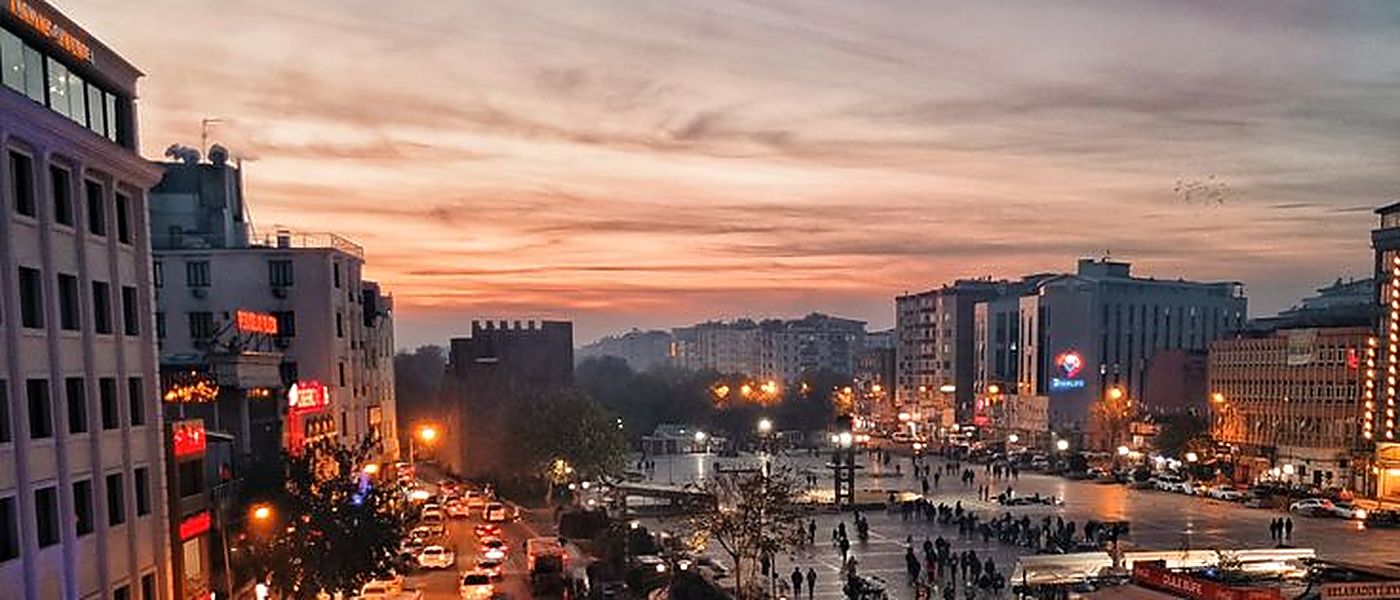
In Amed (Diyarbakır), 27 new teaching positions have opened for Kurmanji, and five for Zazaki. The scope is the city centre and its districts.
A norm, in the Turkish school system, is an established staff slot: recognition that a school has room for a teacher of that subject. No norm, no appointment — which makes the count the most concrete measure of a language's place in a school.
The figure in Amed: from 34 to 61
Before this, Amed had 34 Kurmanji teachers. With 27 added, the number becomes 61. On the Zazaki side there were eight; with five added, 13. Together, a teaching capacity of 42 rises to 74.
The announcement was made by Hüdai Morsümbül, head of the Kurdish Commission of the Eğitim-Bir-Sen Diyarbakır branch.
The report does not state which institution opened the positions, nor the appointment calendar, the schools or the number of pupils. What is not known is written as not known.
Zazaki: from eight to thirteen
Five positions looks small. But Zazaki's standing today as a written language is the result of more than half a century of work — Malmîsanij among those who did it, compiling dictionaries, grammar and periodicals without a university chair. The distance between writing a language down and teaching it in a classroom is closed by posts like these.
A number that moves from eight to thirteen asks for no adjective. It carries its own weight.
In the diaspora: a Kurdish-language university in Germany
Another entry from the same year comes from Germany. Deutsch-Kurdisches Forum e.V., headed by Dr. Younes Bahram, plans to open a university teaching in Kurdish in 2026.
Planned programmes: Kurdish language and literature, social sciences, engineering. Instruction will be predominantly in Kurdish — Kurmanji and Sorani — alongside German and English. The intended students come from Rojava and the Kurdistan Region of Iraq; applicants need a high school diploma and an online entrance exam.
The university's name, its city and its funding have not been announced. Not known, so not written here.
A teaching post in Amed, a curriculum in Germany: two ends of the same task — a language able to produce its own teachers and its own students.
What a club's name carries
The club changed its name to Amed Sportif Faaliyetler in 2014. The Kurdish name of the city has been on the shirt ever since.
The club is in the Süper Lig this season; after five weeks it sits third with 10 points. Amed SFK play in the 2026-2027 Suwen Women's Football Super League; they opened the season away to Giresun Sanayispor on Saturday 29 August 2026 at 17.00 at the Giresun 75. Yıl ground.
The club has issued no statement on these positions. The connection is plainer: Kurmanji taught in the city and a club called Amed belong to the same life — the same city, the same language, the same people who watch Kurdish football and send their children to Kurmanji class.